What Is a Discharge Application?
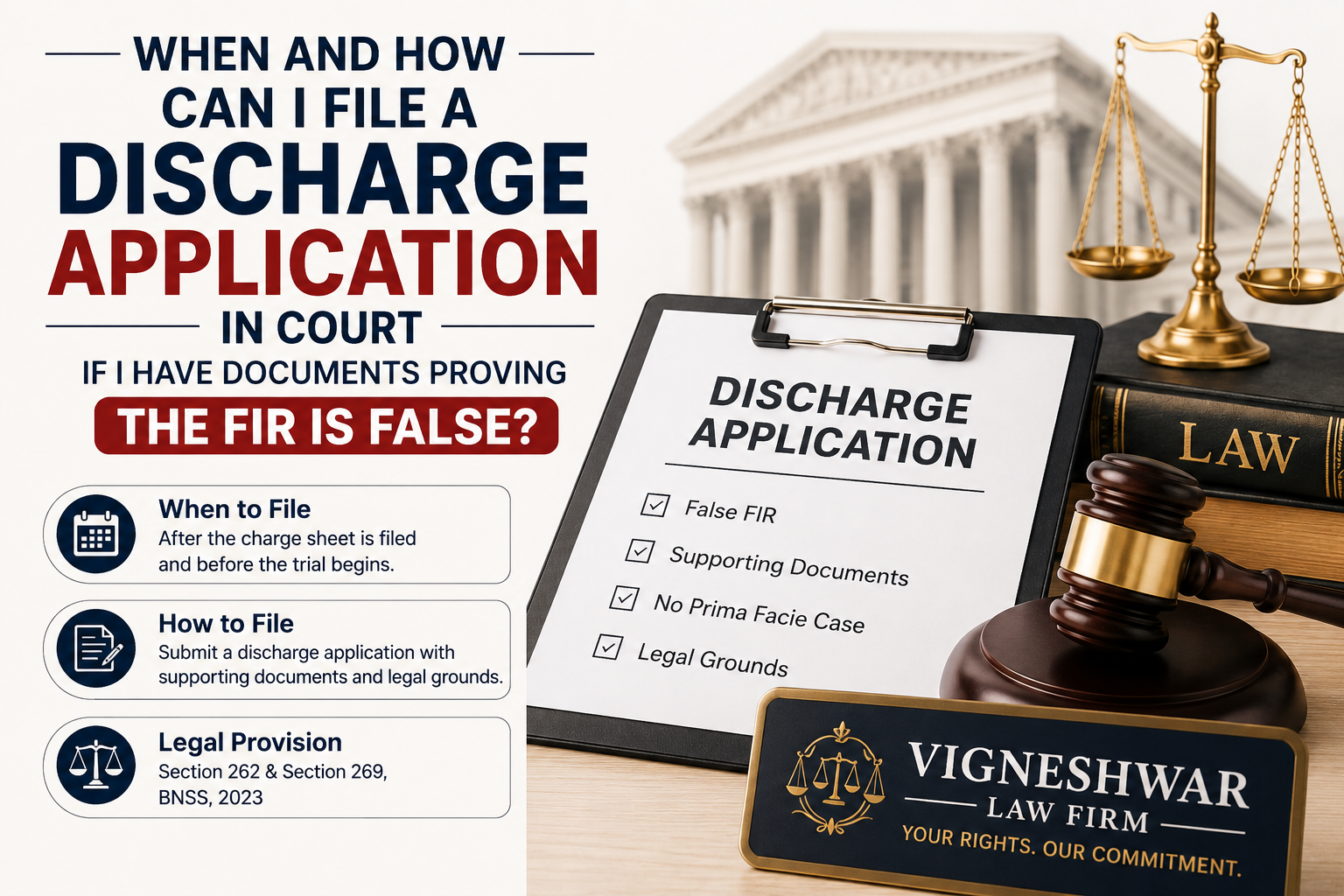
A discharge application is the legal process initiated by the accused asking for discharge of the case due to lack of sufficient evidence to frame the charges against him. In this regard, the court takes into account the report of the police, case files, documentation produced during investigation and views of both sides before taking any decision regarding discharge of the accused.What Types of Evidence Can Strengthen Your Defence?
Legally, when deciding a discharge application, a Magistrate or Sessions Judge is strictly confined to the case file and chargesheet submitted by the police. They are legally barred from looking at external defense documents (such as your own WhatsApp chats, independent CCTV, or travel tickets). If you hold absolute, indisputable proof that the FIR is false, you should instead skip the discharge route and file an FIR Quashing Petition under Section 528 of the BNSS before the Delhi High Court, which possesses the inherent power to look at external evidence to prevent an abuse of justice.- Email or WhatsApp messages
- CCTV footage
- Bank statements
- Official documents
- Medical documents
- Government documents
- Contract/Agreements
- Travel documents
- Any other document that supports your defence
Legal Framework for Filing a Discharge Application
The exact section depends on which court is handling your case:- Section 250: For cases tried before a Court of Session (e.g., severe crimes like rape, homicide).
- Section 262: For Warrant cases tried by a Magistrate based on a police report.
- Section 272: For Warrant cases instituted via a private complaint.
- Section 274: For Summons cases (a new statutory power allowing magistrates to drop groundless minor charges before trial).
How to File a Discharge Application
- Discuss your case with a skilled criminal lawyer or with the best Law Firms in Delhi for a discharge application in Criminal Matters in order to assess the applicability of a discharge application in your case.
- Study FIR, chargesheet, and investigation papers to know the facts of the case and the valid grounds to file discharge application.
- Prepare all necessary documents which can help you in your case.
- Prepare a discharge application by clearly mentioning the facts of the case and valid grounds for discharge.
- Submit the discharge application in the appropriate criminal court with the required documents.
- Attend the court hearing and both prosecution and defense will put forward their case before the court.
- Wait for the court’s verdict as the court will allow or reject the discharge application depending upon the facts and records.
Documents Commonly Required
While requirements might differ in each situation, the following documents should be considered helpful:- FIR Copy
- Chargesheet (if any)
- Court papers
- Documents in support of your defense
- ID Documents
- Affidavit (if needed)
- And other relevant documents
When Can a Discharge Application Be Considered?
An application for discharge may be entertained where, among other things:- There is no material which establishes grounds for pursuing the matter further.
- The allegations do not seem to have any basis according to the investigation documents.
- There is documentary proof that is contradictory to the case of the prosecution
- The elements of the supposed crime are not established.
Why Choose Vigneshwar Law Firm for Discharge Applications?
Vigneshwar Law Firm is well renowned as best Law Firms in Delhi for Discharge Application in Criminal Matters. Having a skilled criminal law lawyer for your defence, our law firm offers professional legal services with respect to discharges, FIRs, bails and other criminal cases. With our skilled attorneys we make sure that all clients get practical legal advice according to their needs. Secure yourself legally through our professional criminal law lawyers available at Vigneshwar Law Firm.Frequently Asked Questions
Find answers to common questions about our legal services, advisory consultation process, and more. We understand that legal matters can be complex, and individuals might have various queries before they can proceed. Below we have answered some of the common questions for your reference. If you don’t get your specific question here, just contact us and get the process started.
No, because all the facts and evidence are considered by the court while making the decision.
Yes, a discharge application is normally lodged after filing of the chargesheet and before framing of charges.
Yes, the court may refuse the discharge application based on sufficient grounds.
Choosing an experienced criminal lawyer will be very helpful in your case.
Can I lodge a discharge application before framing of charges?
Yes, a discharge application is lodged before framing of charges by the court against the accused person.